Loading...
Serving Conway, AR and surrounding areas. (501) 497-0067
Cold floors, musty smells, and climbing utility costs often trace back to an uninsulated crawl space. We seal the problem at the source so your home stays comfortable year-round.
Crawl space insulation in Conway acts as a thermal barrier between the ground beneath your home and the living floors above it - most jobs on a single-family home take one to two days and make a noticeable difference in both floor temperature and monthly energy costs. Without it, outdoor heat and cold transfer directly through your floor into your living space, and your heating and cooling system works harder every single day to compensate.
Many Conway homeowners do not think about their crawl space until they notice cold floors in January or a musty smell that shows up after every rainstorm. Both are signs that the space under your home is not properly sealed or insulated. If there is also old, damaged material down there, our wall insulation and whole-home insulation options pair naturally with a crawl space project for homeowners who want to address heat loss from multiple directions at once.
Crawl space work in Conway involves more than just placing insulation. Because of the local climate and soil conditions, a vapor barrier on the ground is almost always part of the right answer. A contractor who skips that step is setting you up for moisture damage within a few years.
If you walk across your kitchen or living room on a January morning and certain spots feel noticeably colder than others, that is often the crawl space below. Conway winters are mild but real, and without insulation, the cold ground transfers directly through your floors. It is one of the clearest signs the space needs attention.
Conway gets significant rainfall each year, and the clay soil beneath many homes holds moisture near the surface. If you notice an earthy or musty smell inside your home - especially after a wet stretch of weather - moisture is likely moving up from the crawl space into your living areas. That smell is a warning the insulation and vapor barrier need attention.
If your heating and cooling costs have climbed but nothing obvious has changed, the crawl space is worth investigating. An uninsulated or degraded crawl space forces your HVAC system to work harder year-round. Most homeowners notice the improvement in their bills within the first full season after proper insulation is installed.
Many Conway homes built before the 1990s were constructed with little or no crawl space insulation, or with materials that have long since deteriorated. If you have never had a contractor look under your home, there is a reasonable chance the insulation is sagging, wet, or missing in sections. A free inspection gives you a clear picture.
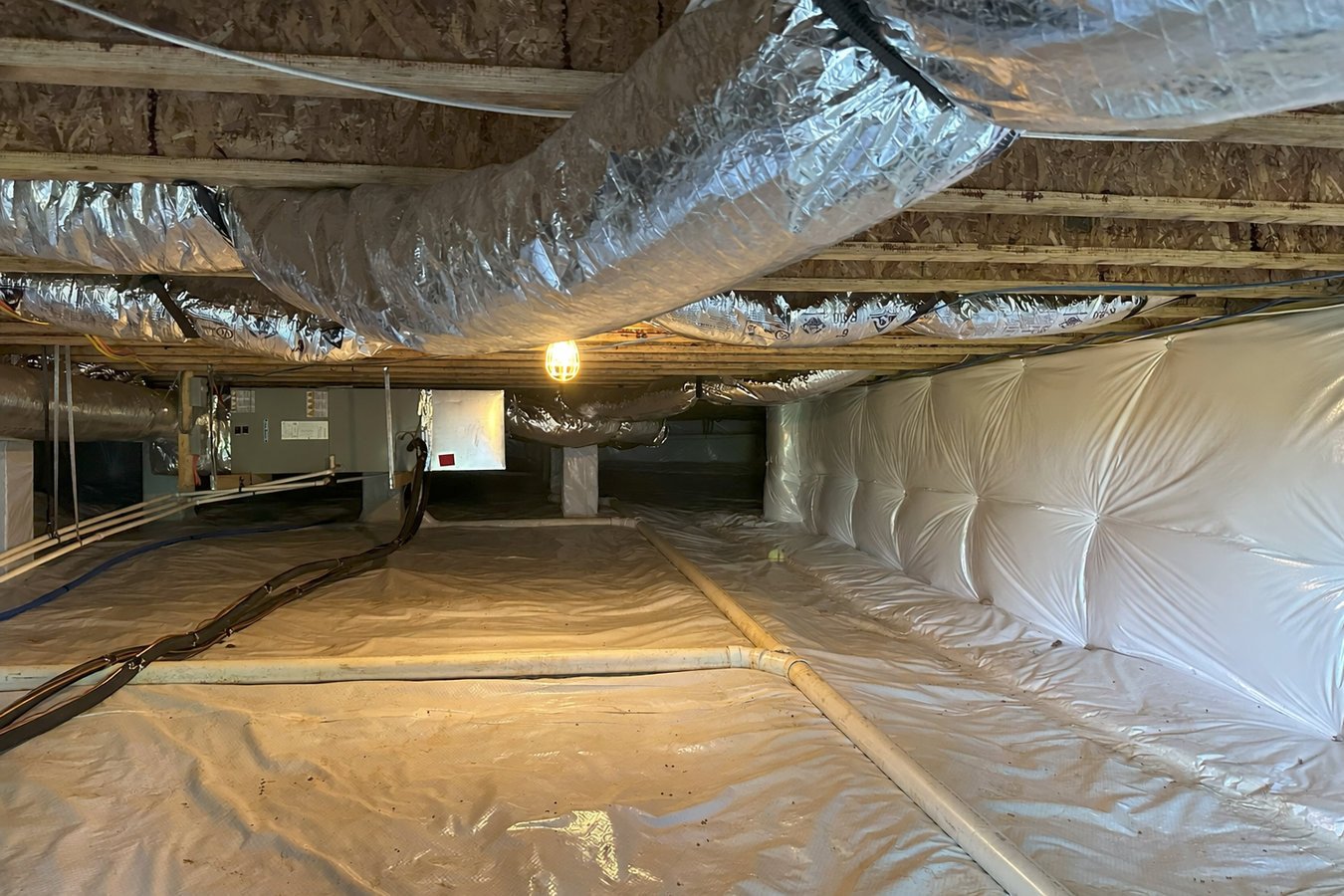
We offer both traditional floor joist insulation and full crawl space encapsulation, and we recommend the right approach based on what we find during the inspection. Floor joist insulation places material between the wooden beams that support your floor - it is a practical, proven approach that works well in many Conway homes. Encapsulation goes further: the entire crawl space is sealed with a heavy liner on the walls and ground, and sometimes a dehumidifier is added. In Conway, where humidity is a year-round concern, encapsulation tends to hold up better over time because it keeps moisture out of the space entirely rather than just slowing its effect on your floors.
Both options start with a vapor barrier on the ground - a non-negotiable step in Faulkner County's clay-heavy soil, which retains water close to the surface after every rainstorm. We also pair crawl space work with our crawl space vapor barrier service when the existing liner is damaged, thin, or missing altogether. For homes that want a fully sealed and conditioned crawl space, that combination delivers the best long-term results in Conway's climate.
Traditional method suited to accessible crawl spaces in good condition, typically the fastest and most budget-friendly option.
Best for Conway homes with persistent moisture issues, musty odors, or crawl spaces that have seen recurring pest or mold problems.
Paired with insulation to block ground moisture from rising into the insulation and your living floors above.
Recommended when existing material is damaged, sagging, or contaminated before new insulation is installed.
Conway sits in central Arkansas, where summer humidity regularly climbs above 70 percent and temperatures hold above 90 degrees for months at a time. That combination pushes warm, moist air directly into crawl spaces, where it condenses on cooler surfaces and soaks into any insulation present. Faulkner County's clay-heavy soil makes the problem worse - after Conway's heavy spring rains, that moisture sits near the surface and evaporates upward all summer. For homeowners in Conway, a vapor barrier on the crawl space floor is not an optional upgrade - it is the foundation the rest of the insulation work depends on. Homeowners we serve in Benton and Maumelle deal with similar soil and humidity conditions, and the crawl space work follows the same principles across this part of Arkansas.
A large share of Conway's housing stock was built between the 1960s and 1980s - before modern crawl space insulation standards were established. Many of those homes were built with minimal insulation under the floor, or none at all. If your home is more than 30 to 40 years old and the crawl space has never been properly addressed, there is a reasonable chance the insulation has degraded well past the point of doing any good. Conway winters are mild, but temperatures in the 20s and 30s are still enough to let heat escape through an uninsulated floor every night from December through February.
We respond within 1 business day. We will ask about your home's age, approximate square footage, and any specific problems you have noticed - cold floors, odors, or moisture. This helps us come prepared with the right approach for your situation.
We physically go under your home and look at what is there - the condition of existing insulation, any moisture or mold, and how accessible the space is. This inspection is what separates a real estimate from a guess, and there is no charge for it.
After the inspection, you receive a written quote that breaks down what work is recommended and what it costs. A trustworthy contractor explains what they found and why they are recommending each item. This is a good time to ask questions and compare quotes.
The crew removes any damaged insulation, addresses moisture issues, installs the new insulation and vapor barrier, and cleans up. When done, we document the work with photos and walk you through what was completed - so you know exactly what you paid for.
We respond within 1 business day and send someone out to inspect your crawl space at no charge. You get a written quote after the inspection - no obligation to hire, no pressure. The estimate is free, and so is the peace of mind from knowing what you are dealing with.
(501) 497-0067We give you a free written estimate before work starts and document the job from start to finish, photographing conditions before and after. That record is your protection if anything ever needs to be revisited - and a sign we have nothing to hide.
We have worked under enough Conway homes to know that skipping the vapor barrier and going straight to insulation is a mistake here. Our standard crawl space process addresses moisture control first, then insulation - so the work actually holds up through Conway's wet spring seasons.
Crawl space work happens somewhere most homeowners never see. We inspect for free, document what we find, and provide photos of the completed job. You know exactly what was done under your home without having to crawl under it yourself.
We work in crawl spaces throughout Conway and surrounding Faulkner County. The housing stock, the soil conditions, and what Arkansas summers do to insulation are all familiar territory. We are not learning your local conditions - we already know them.
The EPA recommends addressing moisture control before or alongside insulation in crawl spaces - a step that directly affects how long your insulation lasts and how healthy the air inside your home stays. That is the standard we follow on every job.
Pair crawl space work with wall insulation to address heat loss from multiple parts of your home in a single project.
Learn moreA heavy-duty vapor barrier on the crawl space floor is the moisture-blocking foundation that makes insulation last in Conway's climate.
Learn moreContact Conway Insulation for a free crawl space inspection - the longer the space goes uninsulated, the more you spend every month on heating and cooling that escapes through the floor.