Loading...
Serving Conway, AR and surrounding areas. (501) 497-0067
Gaps in your attic floor let hot, humid air pour into your living space all summer long. Sealing those gaps stops the heat at the source so your AC runs less and your home finally holds a comfortable temperature.
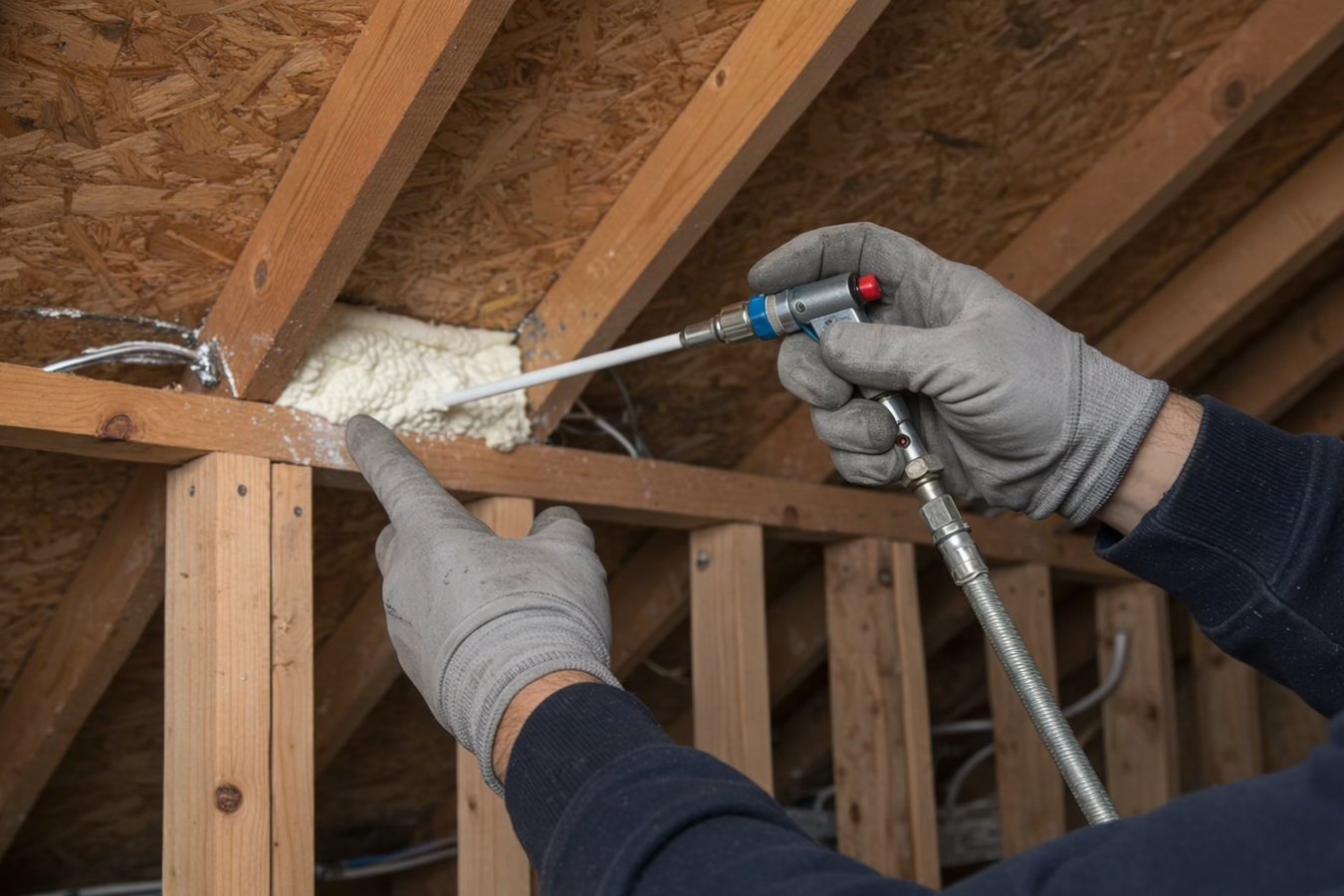
Attic air sealing in Conway, AR means finding and plugging the gaps in your attic floor where conditioned air escapes and outside air sneaks in - most jobs for a typical home take one to three hours and can be done without you leaving. A contractor uses foam, caulk, and tape to close off openings around light fixtures, plumbing pipes, wiring, and the attic hatch. These gaps are invisible from inside your living space but can add up to a hole the size of a basketball or larger. Sealing them first, then insulating above them, is the order that actually works.
Insulation slows heat from moving through solid surfaces, but it cannot stop air from flowing through gaps. If your attic has unsealed holes, hot air pours down into your living space all summer and warm air bleeds out in winter - regardless of how much insulation sits on top. For Conway homes built before 2000, attic air leaks are almost universal, and they are one of the most common reasons Entergy bills climb every summer. Pairing this service with crawl space vapor barrier work below gives you a complete solution from attic to foundation.
The ENERGY STAR Seal and Insulate program identifies attic air sealing as one of the highest-impact improvements a homeowner can make, with payback periods that are often faster than homeowners expect in hot, humid climates like central Arkansas.
If rooms directly under the roofline stay noticeably warmer than the rest of the house during Conway's summer months, hot attic air is pushing down through gaps in the ceiling. This is one of the most common complaints from central Arkansas homeowners, and the fix is not a bigger AC unit - it is closing the path that lets the heat in.
Conway homeowners who see their Entergy bills jump sharply in June and stay high through September often assume their AC is aging or undersized. But a leaky attic can add hundreds of dollars to annual cooling costs by forcing your system to run longer than it should. If your bills have crept up over the years and nothing obvious has changed, an attic inspection is a smart first step.
Hold your hand near a recessed ceiling light or near the edges of your pull-down attic stairs on a hot summer day. If you feel warm air moving downward, that is outside air finding its way in through unsealed gaps. This is especially common in Conway homes built before the mid-2000s, when recessed lights were routinely installed without any air barrier around them.
If you peek into your attic and see dark streaks or dirty-looking patches on the insulation near the ceiling, that is a sign air has been flowing through gaps and carrying dust with it for years. It is a visible record of where the leaks are. This kind of staining is common in older Conway homes and tells you exactly where sealing work needs to happen.
Conway Insulation performs thorough attic air sealing that addresses every penetration - not just the obvious ones. We seal the gaps around recessed light fixtures, plumbing and electrical penetrations, wall top plates, and attic hatches using foam, caulk, and rigid foam board depending on the gap type and size. We check for every common problem area rather than just the spots that are easy to reach. When combined with a full whole-home air sealing package, attic sealing gives you the most complete coverage for the zones where heat and moisture move most aggressively in Conway's climate.
We run a blower door test before and after every job so you have a measurable record of the improvement. Most contractors skip this step. We include it because it is the only way to confirm the work was actually effective. We also take photos of every sealed gap so you have documentation of what was done - useful if you plan to claim Entergy rebates or federal energy efficiency tax credits.
Best for homes with multiple ceiling fixtures, plumbing drops, and wiring runs that create dozens of small but costly gaps in the attic floor.
For homes where the pull-down staircase or hatch is a major entry point for hot or cold air - a common problem in pre-2000 Conway homes.
Suited for older homes where the gap where interior walls meet the attic floor has never been sealed, allowing air to travel between floors.
For homeowners planning to add blown-in or spray foam above the attic floor and wanting gaps closed first so the insulation works as designed.
Conway's cooling season starts in May and does not let go until October - five or more months of your AC fighting against a hot attic. Many of Conway's established neighborhoods, including areas near Hendrix College and the older sections near downtown, have homes built in the 1960s and 1970s that were not constructed with airtight practices. Decades of settling have opened up additional gaps around pipes, wires, and ceiling fixtures that were not there when the house was new. Those homes have often never had any attic air sealing done at all. Homeowners in North Little Rock face the same housing stock and climate and see the same results from this work.
Conway's average relative humidity is high for an inland city - regularly above 70 percent. When humid outside air flows through attic gaps into your cooled living space, your air conditioner has to remove that moisture as well as cool the air. That extra load means air leaks cost Conway homeowners more per gap than they would cost a homeowner in a drier climate, which makes the return on sealing work faster and more meaningful. Entergy Arkansas has also offered rebate programs for qualifying insulation and air sealing improvements - ask before your job is scheduled, not after. Homeowners in Russellville and across central Arkansas report similar comfort gains after attic sealing. The Entergy Arkansas energy efficiency program details current rebate availability.
Call or submit the form and we will get back to you within one business day. We will ask about your home's age, comfort issues, and whether you have noticed any bill spikes. This helps us arrive prepared and give you a useful estimate without a lengthy back-and-forth.
We go into your attic and check the existing insulation, locate penetrations and gaps, and measure the accessible space. We run a blower door test to get a baseline reading on how leaky your home is. You receive a written estimate with a clear list of what we will seal and why.
The crew works in your attic using foam and caulk to seal every penetration from the list. You do not need to leave your home. The work is not loud from inside the living areas, and there is no drying or curing period that disrupts your day.
After sealing, we run the blower door test again so you have a measurable before-and-after comparison. We take photos of the sealed gaps and provide documentation for Entergy rebate or federal tax credit claims before we leave.
We respond within 1 business day. The estimate is free, includes a blower door test, and carries no obligation. Submit the form or call and we will get you on the schedule.
(501) 497-0067We photograph each project before and after, so you have a clear record of exactly what was found and what was completed in your attic. That documentation stays with you for future reference.
Most air sealing contractors skip the diagnostic test. We run a blower door test before and after every job so you have a number that proves the improvement - not just our word for it. You see the before and the after, and you keep the documentation.
We work across Conway and Faulkner County and know exactly where older homes leak - around the knob-and-tube wiring paths, the pull-down stair gaps, and the top plates that were never sealed. Local experience means we find what other contractors miss.
Entergy Arkansas rebates require specific paperwork, and federal tax credits require documentation of the improvement. We provide that documentation at job completion so you can file without chasing records after the fact.
Attic air sealing is one of the few home improvements where the results are measurable before you get the bill - you see the blower door numbers drop and you feel the difference in comfort within days. Contact us to schedule your free assessment and get a written estimate with no obligation.
Address moisture entry from below while attic sealing handles the top - a complete above-and-below approach for Conway homes on crawl space foundations.
Learn moreExtend air sealing beyond the attic to include crawl spaces, wall penetrations, and the full thermal envelope for maximum impact on comfort and bills.
Learn moreSpring appointments fill up fast once temperatures start climbing. Call now or submit a request to get on the schedule - most jobs are done in a single visit with no need to leave your home.